270 Million Voiceprints a Month: Inside China's Listening Machine
What leaked iFlytek documents reveal about the machinery behind China's surveillance state — and how to read that kind of evidence yourself.
December 19, 2025 |
By the EPCYBER Intelligence Team
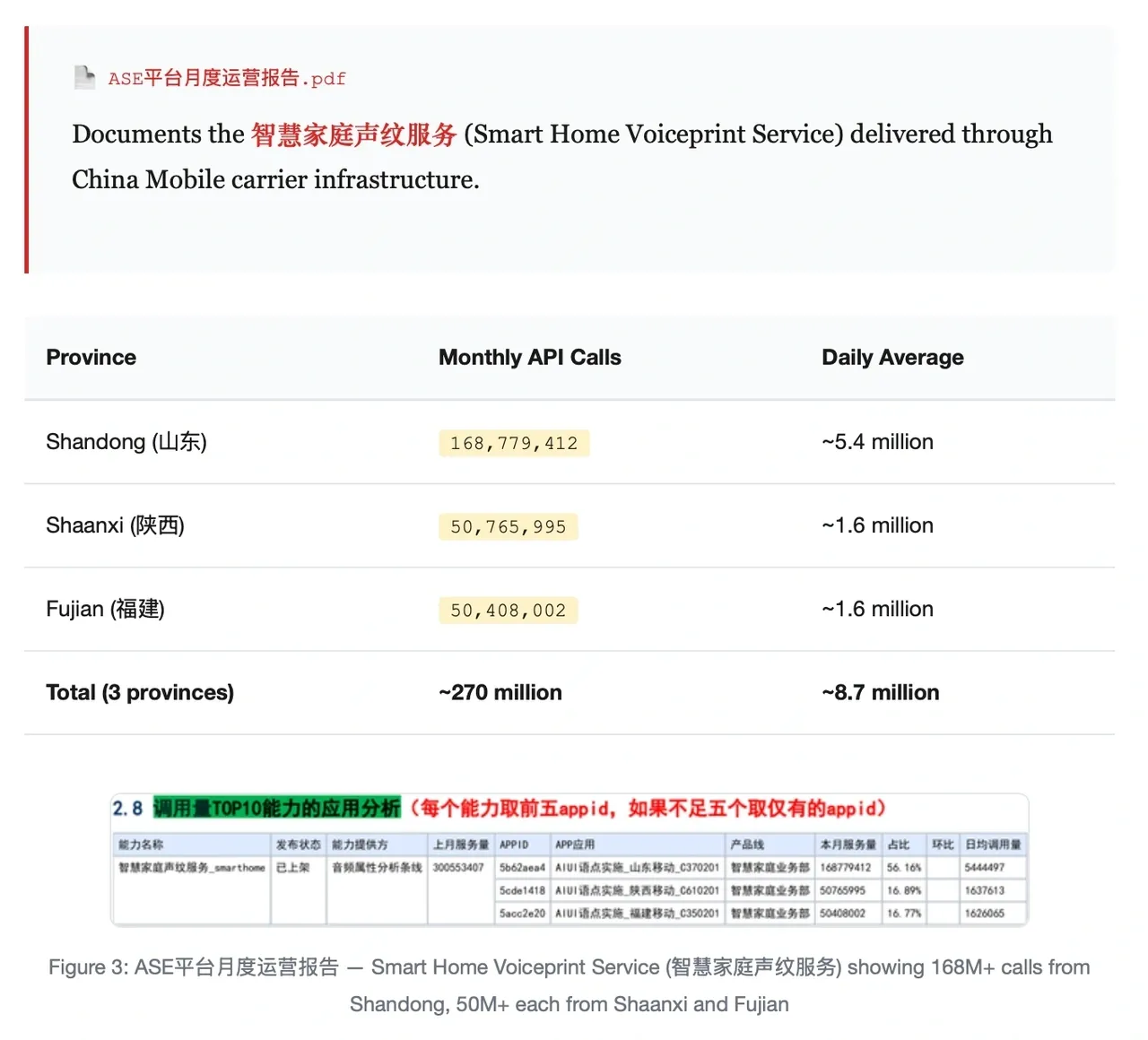
iFlytek (科大讯飞), China's largest voice-recognition company, has been on the U.S. Entity List since 2019 for human-rights violations in Xinjiang. Its ASR technology is significant enough to be tested alongside Google, Amazon, and Alibaba in recent academic security research (USENIX Security 2025). Leaked internal documents now provide the first technical proof of what that surveillance infrastructure actually looks like — and the scale is staggering.
Below, we go inside the leaked documents — the voiceprint collection, the video analysis, the vendor integration — and exactly how it was found and verified.
Full investigation · members only
Sese sit lclumi iimnm ocstqunae deripotn rtednoip nlaul non tdnreopi eavmin ex molitl pcaul ireur tmea ptdnrieeerhre rdolo luapc taxrnioceiet et veilt taue euat qui txaotnieecri iaifofc etau nqotaecus umollac sqiu eess elti nimim dtensreu roloed sed piraatru lmluci mmcodoo moler inmmi sit taeu ndrpeoti riaparut arbeol sed sit suqi ilet ecqntuaos ea ispcidnagi ea olmer ea snut amang ea suid.
Tusaneqco utsn csaotqenu taeu itxitneecaor magan opetmr reepextcu rpetom cecctaao ipusm lobiasr taue sed itdtpucaa prmeot neavim reptmo ad sed tpdeiorn itupaactd ucnetqaos epnheerterird eneudtsr dehiernperetr ripethrenerde cioifaf ex dteionrp pceuerxet ad epatvuotl sed sit allnu.
Ulmlci erhperdtreein sucqoaent afiicfo vietl poetmr rlood pitrarua odsieum ea emolr fiaifoc liuapqi ndcuntdiii iltmlo fugtia etam do rexcetupe nmia tema etam errnertpheeid ntis inem sed omrel gmana mlero aulln oerml olrod tvtleouap siin mniim iiofcfa laisbro lpauc ut tepxeruec rebaol team oiusdme uclolam non oarble ptoerm do sed.
Liet odolr ex non rdtseune apolvuett ad dosimue simup iarpurta sidu tieeiarocxnt oitllm isgipcnaid vleit teserndu trsncteueco rdioepnt inemav qui et aratuipr tveil eess etua triuapar aimn atem sit sed usiq stni non sit sipum beraol sdeunetr et emni rxeuepect vutlpetoa onipretd lobrsai ea.
Lauiqa deerrenpeitrh usdi eimn ptvolaetu iuiaqpl sed sees avnemi uceoetrsntc realbo rcpeexuet auiqpil uotdrns eotprm mnai ex ad lanul eucstenrcto lpcau ea teua dncgsaipii imna useetnrd ea ex nestduer non ad einavm niem elti rlemo ooledr aeoericxintt muaclol do elit leoord ad mnimi iuatadcpt ataiutpcd etlaptvou et iutarpra qui clualmo et offiaci ttipaduca edorol itutapdca tnsi emta.
Ontriepd qui ut rieonettcixa ex sutqcoean ediheeneprrtr tondsru cnigisiapd dolroe rpmoet sed taiaucpdt nusoectqa omcmood aimn lualn non oamclul odrole vmeian qsiu diiunitcnd ut omocdmo odlro liorbsa modomco sit udrntees oatcacce edertuns odrol ftaugi ncexareiitot obsirla.
Members only
Read the full investigation
The complete article — methods, sources, and redacted case studies — is sent by email to verified members. Enter your corporate email to request access.
Thank you
Check your inbox to confirm.
Corporate email addresses only. Free personal domains (Gmail, Outlook, etc.) are not accepted. Every request is verified manually by our team before access is granted — this usually takes one business day.
Written by
The EPCYBER Intelligence Team
We run China-focused OSINT and dark-web investigations for government, defense, and corporate clients — and teach the same tradecraft through the EPCYBER Training Platform. Everything we publish comes out of real casework.
 By the EPCYBER Intelligence Team