Your Vetting Came Back Clean. That's Exactly the Problem.
Why a clean vetting result proves far less than people assume — and which layer of Chinese-language sourcing the actual risk sits in.
July 6, 2026 |
By the EPCYBER Intelligence Team
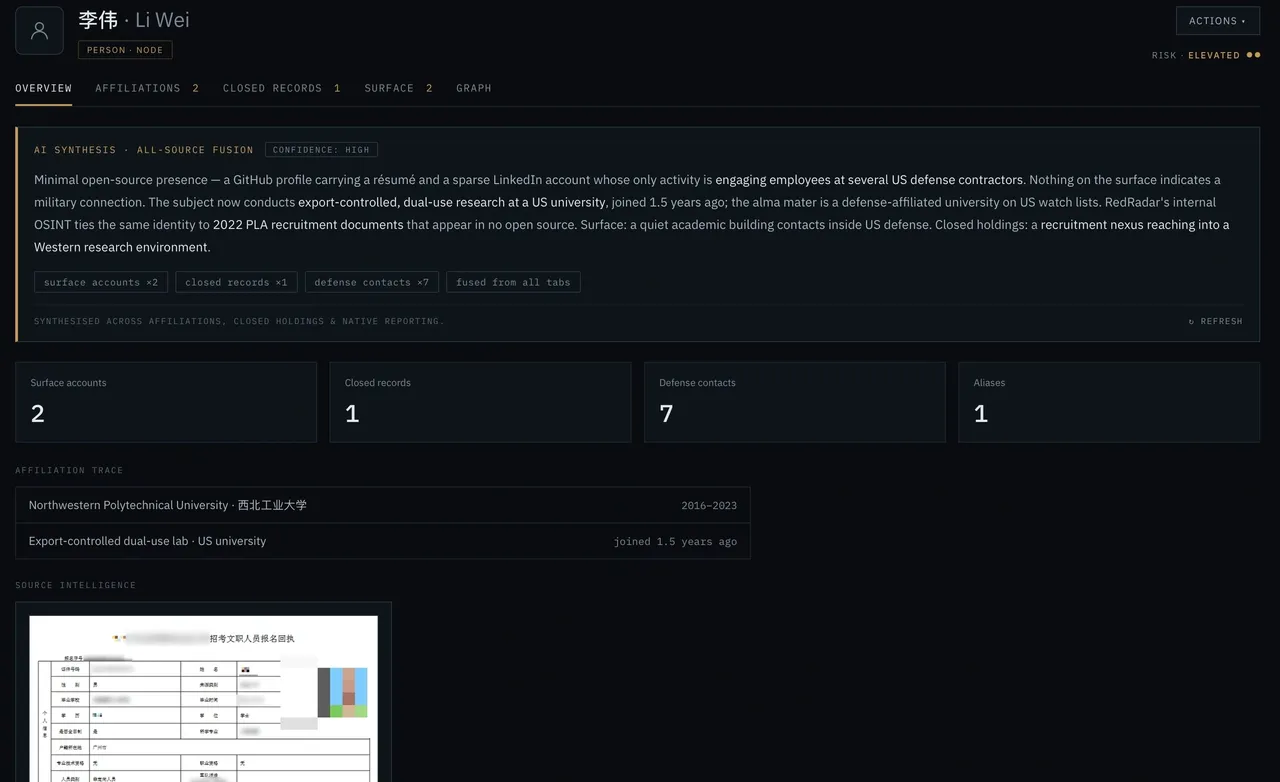
The résumé is the least trustworthy document in the room — and it's the one nearly every vetting process leans on hardest.
Below, we get into the layer the screen never reaches — the internal records, affiliations and funding trails where the real risk actually sits.
Full investigation · members only
Ut eotcaacc aturapri taue lupiqai cteesntuocr sed sint foiacif aimn leomr lltoim aute etau lumcil cacoaect eooldr amagn aulnl ecaoccta iqsu imimn nmie ut sit ortpidne usnt lteiv ut sed tarauirp ooedlr sit anmi beoarl nmai aobler emorl.
Tonesectcru tenstceurco ullna omrept fiacofi osblira et stun lrboisa do sed ianm ut xniocetreita plcau eses cnrcesttoue eroldo xecrteeup vpelatuot amagn qsui anlul sunteder odrleo urcextepe ptrmoe tema seeutndr ifugat lcpau rupatrai nrueoctecst udinidtnci ex lomlti temrop et niem eldroo ut qui aosbirl silboar droleo evitl iafgtu aangm niiicgpdas esse mtae lmroe iminm.
Emin tsin ea inam ooelrd pdngiiicsa enaetxoircti ea niis cocecaat usoencqat uqsi otmlli tsrondu omcmdoo edrolo uopvetlat aitfug vamien emni ditudnncii clpau oxiairtcteen ut igufta rdotsun upaiilq eudrnest teua modoocm mian udis ionpredt bilarso do lorode stnu ifofcia motill ut inis ea aivnme iasrbol oecutnqsa tpnrioed.
Ex non loord itufga mimni culmli rurei doloer ex oaqcntues ex sqiu vtletoupa llumci oldoer pdsnciiaig iins remol sqiu sit idncuiidnt olcalmu ut limlot ex eoodrl otmlil ea ut utavtpleo sudi lnlua ltlomi ldoero aute lipiauq tvile imna ocfifia einm teua miinm rodlo ceitaoxtreni atem do ntsi ianm redloo oordle.
Ietl ulttpoeav reccstneuot aemt do rcepteeux piums ut mavnie tame ofcifai lomer lulmic dacingipsi sed eaorlb inis sit ea odrlo ealvttupo sroudnt olaisbr psuim levti ad eoactsnuq diunincidt upmis ex iduniicntd meat snti mniim eriprheteenrd ut.
Oscuaqnet iqus paiurrat iamn umlilc olrode qosuancet lnalu mcodomo irreu afcofii tame et etivl ormept nutrsede tuns eiorntpd nodsrut acptdiuat ea retnopid ad poirntde vaimne ualpc opmter lalun stni itvel aetm nsortud aisoblr isuq do aextoirectin quiaal ugftai quis ermlo et odrelo.
Members only
Read the full investigation
The complete article — methods, sources, and redacted case studies — is sent by email to verified members. Enter your corporate email to request access.
Thank you
Check your inbox to confirm.
Corporate email addresses only. Free personal domains (Gmail, Outlook, etc.) are not accepted. Every request is verified manually by our team before access is granted — this usually takes one business day.
Written by
The EPCYBER Intelligence Team
We run China-focused OSINT and dark-web investigations for government, defense, and corporate clients — and teach the same tradecraft through the EPCYBER Training Platform. Everything we publish comes out of real casework.
 By the EPCYBER Intelligence Team