Threat Intelligence Platforms Suck. Here's Why
I've spent fifteen years in this space — the last ten watching organizations buy CTI platforms for dark web threat intelligence expecting coverage and getting dashboards. Automation has its place, but it was never meant to be treated as 100% foolproof reliance that somehow produces timely, actionable, client-relevant intelligence on its own.
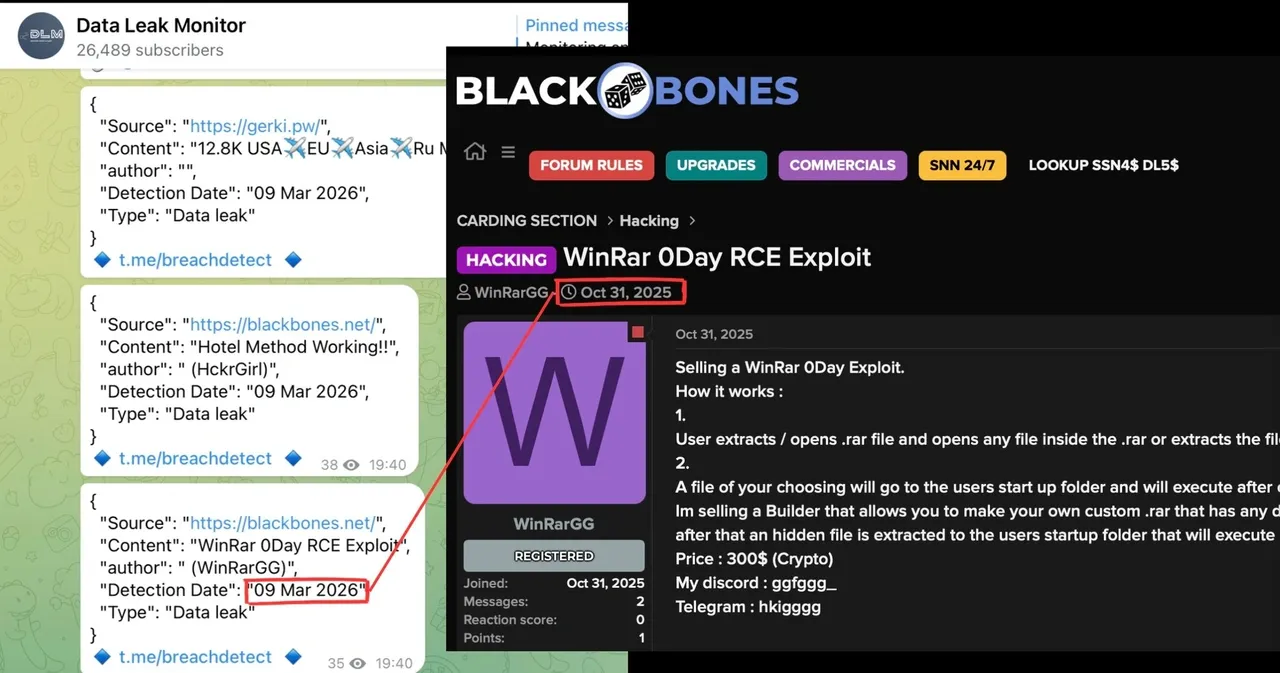
The sales deck shows a map with pins on every underground ecosystem. Russian forums. Chinese markets. Other ecosystem channels. What gets delivered is machine-translated headlines, scraped snippets, and keyword alerts that tell you something exists without telling you whether it matters.
This isn't a vendor problem. It's a structural one. And nobody explains it, because the people selling platforms have no incentive to — and the people buying them don't know what questions to ask.
Here's what's actually broken, and why manual tradecraft remains the main reliable path to intelligence that matters.
The Visibility Gap
CTI platforms catch what's publicly accessible. Open-registration forums. Telegram channels you can find via search. The surface layer of ecosystems that have real depth.
The actors who matter aren't operating on the surface.
Initial access brokers with real corporate network access work private channels — direct messages, referral-only groups, invite-gated forums with vetting processes no scraper passes. Ransomware operators don't post affiliate terms publicly; they recruit through trust networks built over years.
Your platform shows you the lobby. The work happens in the back room.
I've watched teams spend months monitoring forums where nothing operational happens anymore, while the actors they were tracking moved to private Telegram groups, then to Matrix, then to invitation-only Discord servers that spin up and disappear within weeks. The scraper keeps running. The intelligence window closed.
This is the visibility gap. Your platform can only see what it can access — and it can't access what matters.
Manual source development solves this. An analyst who knows how to find new forums, markets, closed communities, and threat-actor networks — resources most analysts never know exist — doesn't depend on a vendor's coverage map. They build their own.
The Freshness Problem
When most CTI vendors talk about identifying new dark web sources, they're operating on a lag of two weeks to three months behind actual emergence.
That's not a failure of effort. It's what automated indexing structurally produces.
Forums get identified late. Exodus was identified late. Most forums are identified late. Ransomware operations run entire campaigns before they surface in any platform. The window between a resource making its first moves underground and appearing in a threat-intelligence product is exactly where the intelligence that matters lives — and it's the window no tool closes.
I've tracked actors who operated for months before any platform picked them up. By the time the alert fired, the campaign was over, the infrastructure was burned, and the intel was historical.
By the time your platform indexes a source, the value has decayed. You're not doing intelligence. You're doing archaeology.
Manual source development closes that window: knowing where to look before there's anything to index, recognizing the early signatures of infrastructure standing up, forums establishing trust networks, markets seeding their first listings. That's not automation. That's tradecraft — the difference between catching threats early and documenting them after the fact.
The Translation Problem
Your platform sends an alert: "Database for sale — 50M records — US financial institution."
What you don't know: Is the actor credible or a scammer? Is this a first-hand breach or a resell from 2019? Is the sample fabricated? Is the price serious or bait? Is it the same dump that circulated last month under a different name?
The headline got translated. The context didn't.
Russian criminal slang isn't Russian. It's built on prison culture, regional dialect, deliberate obfuscation, and in-group signaling. A native speaker spots a scammer immediately — the phrasing is off, the reputation signals aren't there. Your platform sees a keyword match.
Chinese underground forums are worse: classical references, regional dialect, platform-specific slang, deliberate misspellings to evade filters. Automated translation produces something that looks like language but carries no operational meaning.
This is the translation problem. You're not getting intelligence in another language — you're getting noise that looks like signal, because nobody on your side can tell the difference.
Breaking linguistic and cultural barriers in Russian and Chinese ecosystems isn't about running better translation APIs. It's about moving beyond translation entirely — into genuine operational understanding of how these communities communicate, what their terminology actually means in context, and how linguistic patterns produce attribution-relevant intelligence. That's a human skill. It isn't automatable. And without it, you're blind to the ecosystems that produce the majority of threats targeting Western organizations.
The HUMINT Gap
This is the one nobody talks about. Platforms collect. They don't engage. They can't.
The difference between monitoring an actor and understanding an actor is interaction: reading how they respond under pressure, watching how they handle disputes, seeing who vouches for them, who they vouch for, and how they communicate when they think nobody outside their circle is watching.
Elicitation. Persona work. Sustained observation of behavioral patterns across platforms. This is where attribution-grade intelligence comes from. Virtual HUMINT — elicitation methodology, persona construction, engagement without exposure, reading actor communication patterns across language barriers — produces intelligence no amount of passive collection can replicate. It reveals motivation, operational patterns, risk tolerance, and behavioral signatures that persist across infrastructure changes and rebranding.
Collection without HUMINT produces indicators. Indicators without context produce noise. And noise at scale is still noise — just more expensive.
The Detection Gap
Here's where the gap becomes operationally dangerous. Finding C2 infrastructure. Identifying phishing domains before they go live. Tracking malware-as-a-service operations. Catching ransomware affiliate programs during recruitment rather than during encryption.
Your platform runs known signatures against indexed data. It catches what's documented. It misses what isn't. The actors who matter aren't using documented infrastructure patterns — they're rotating, adapting, watching what gets detected and changing before detection catches up.
Manual detection doesn't depend on signatures aging into obsolescence. It depends on understanding how infrastructure gets built, how actors make mistakes, and how to find those mistakes before anyone else documents them.
There's a reason we teach 65+ C2 detection methods. Not because any single one is magic — but because actors adapt, and the analyst who knows three methods runs out of options fast. The analyst who knows sixty-five keeps finding what others miss.
The Source Development Gap
This is the core competency that separates analysts who produce intelligence from analysts who consume feeds.
Source development means finding and assessing new forums, markets, chatrooms, hidden services, channels, and communication platforms across the clear, deep, and dark web before automated platforms and commercial CTI vendors index them. It means turning early access into intelligence advantage. It means recognizing when a new ransomware operation is spinning up infrastructure — not when it publishes its first victim on a leak site. It means identifying the resources threat actors rely on operationally: the infrastructure, platforms, and tooling that conventional CTI methodology routinely misses because it's not on any vendor's coverage list.
Platforms can't do source development. They index what exists; they don't find what's emerging. The gap between "what exists" and "what's emerging" is where every threat begins — and where every platform fails. Manual source development is the only methodology that works in that gap. And it's the one almost nobody teaches, because it can't be automated into a product.
The Skills Gap
Every gap I've described — visibility, freshness, translation, HUMINT, detection, source development — comes back to the same root cause. Platforms scale by replacing humans with automation. Automation handles collection. It doesn't handle analysis, source development, engagement, or the judgment calls that separate signal from noise in environments designed to obscure signal. The result is high-volume, low-context alerting that creates work without creating insight.
The organizations getting ahead of threats aren't the ones with the most expensive platforms. They're the ones with analysts who can find active infrastructure nobody else has found yet, write attribution reports that hold up under scrutiny, and operate across Russian and Chinese ecosystems with genuine linguistic and cultural fluency. Those are different capabilities than knowing what MITRE ATT&CK is and being able to name three Russian APT groups. The market produces plenty of the latter. Almost nothing produces the former.
Why Manual Skills Are the Only Answer
Every method in serious CTI work is manual, transferable, and platform-independent. That matters, because platforms come and go. Vendors get acquired. Coverage degrades. Features get deprecated. APIs change. But an analyst who knows how to find threats manually — without relying on any specific tool or vendor — keeps producing intelligence regardless of budget, tooling, or platform access.
Zero reliance on automated tooling isn't a limitation. It's the capability that keeps working when everything else breaks. The hacker mindset — thinking creatively, moving unconventionally, breaking patterns — is what lets analysts find what others miss. Not because they have better tools, but because they stopped thinking like tool operators and started thinking like the actors they're hunting.
To find what others miss, you have to stop thinking like a traditional OSINT analyst. You have to understand how threat actors create data, how they hide it, and how they make mistakes. That's not a tool. That's a skillset.
What Platforms Actually Provide
Let me be clear: platforms aren't useless. They provide real value — collection at scale for known sources, alerting on known indicators, historical data for pivot and enrichment, and workflow and case management. That's infrastructure. It's just not intelligence.
Intelligence is knowing whether an alert matters. It's finding the source before it's indexed. It's understanding what an actor actually said, not what the translation API approximated. It's engaging without exposure and extracting information that passive collection can't reach. Platforms provide infrastructure. They don't provide tradecraft. And in the gap between infrastructure and tradecraft is where every threat goes undetected until it's too late.
What This Means
If you're relying on a CTI platform for coverage of non-English threat ecosystems, you're seeing fragments: translated headlines, scraped snippets, keyword matches without context. Collection without HUMINT. Alerts without assessment. Detection running two months behind emergence. That's not nothing — but it's not intelligence.
Intelligence requires source access before sources are indexed, language competence beyond translation APIs, cultural fluency that reads behavioral signals, the persistence to track actors across platform migrations, the capability to engage without exposure, and the detection skills to find infrastructure before it's documented. That's not a platform feature. That's a skillset.
And skills transfer. Platforms don't.
The Dark Web Advanced CTI Program
This is why we built what we built. The Dark Web Advanced CTI program covers what platforms structurally cannot deliver:
Source development methodology — how to find new forums, markets, closed communities, and threat-actor networks before automated platforms index them; how to recognize infrastructure standing up; how to turn early access into intelligence advantage.
Closed-access operations — navigating invite-gated forums, referral-only channels, and trust networks that scrapers never reach.
Threat actor profiling and attribution — connecting personas across platforms, building attribution chains, and linking fragmented digital identities into coherent actor profiles that hold up under scrutiny.
Virtual HUMINT techniques — elicitation methodology, persona construction, engagement without exposure, and reading actor communication patterns across language barriers.
Multi-ecosystem fluency — genuine operational capability across English, Russian, and Chinese-speaking underground environments, and how each ecosystem operates structurally, culturally, and linguistically.
Infrastructure detection — 65+ methods and techniques for finding C2 infrastructure, phishing domains, and malware operations before they're documented anywhere.
Zero reliance on automated tooling — every method is manual, transferable, and platform-independent. The skills work regardless of budget, vendor access, or what platforms exist five years from now.
The program includes 10 hours of pre-recorded video lessons, 170+ real-world exercises across live dark web platforms, hands-on labs, field exercises, live Q&A sessions, and direct support.
A student who finishes a typical dark web course knows what the dark web is and can name some forums. A student who finishes ours can find active threat-actor infrastructure nobody else has found yet, write attribution reports that hold up under scrutiny, and operate across Russian and Chinese ecosystems with high confidence. Those are different outcomes.
2026 enrollment is open.